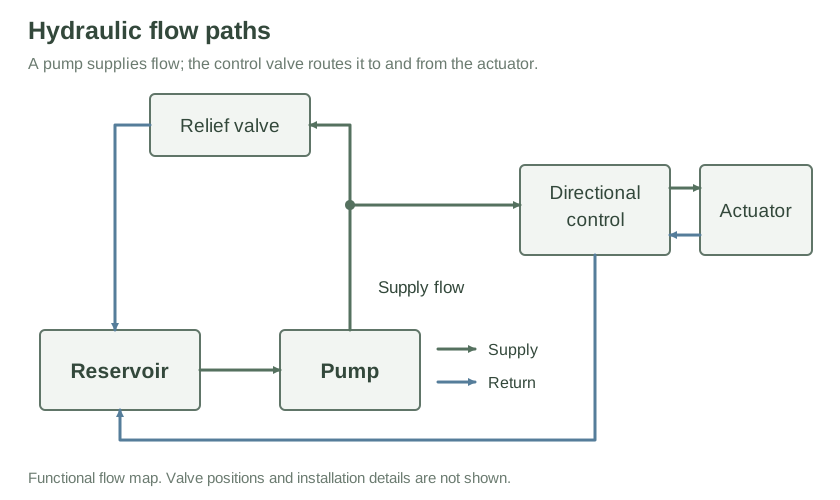
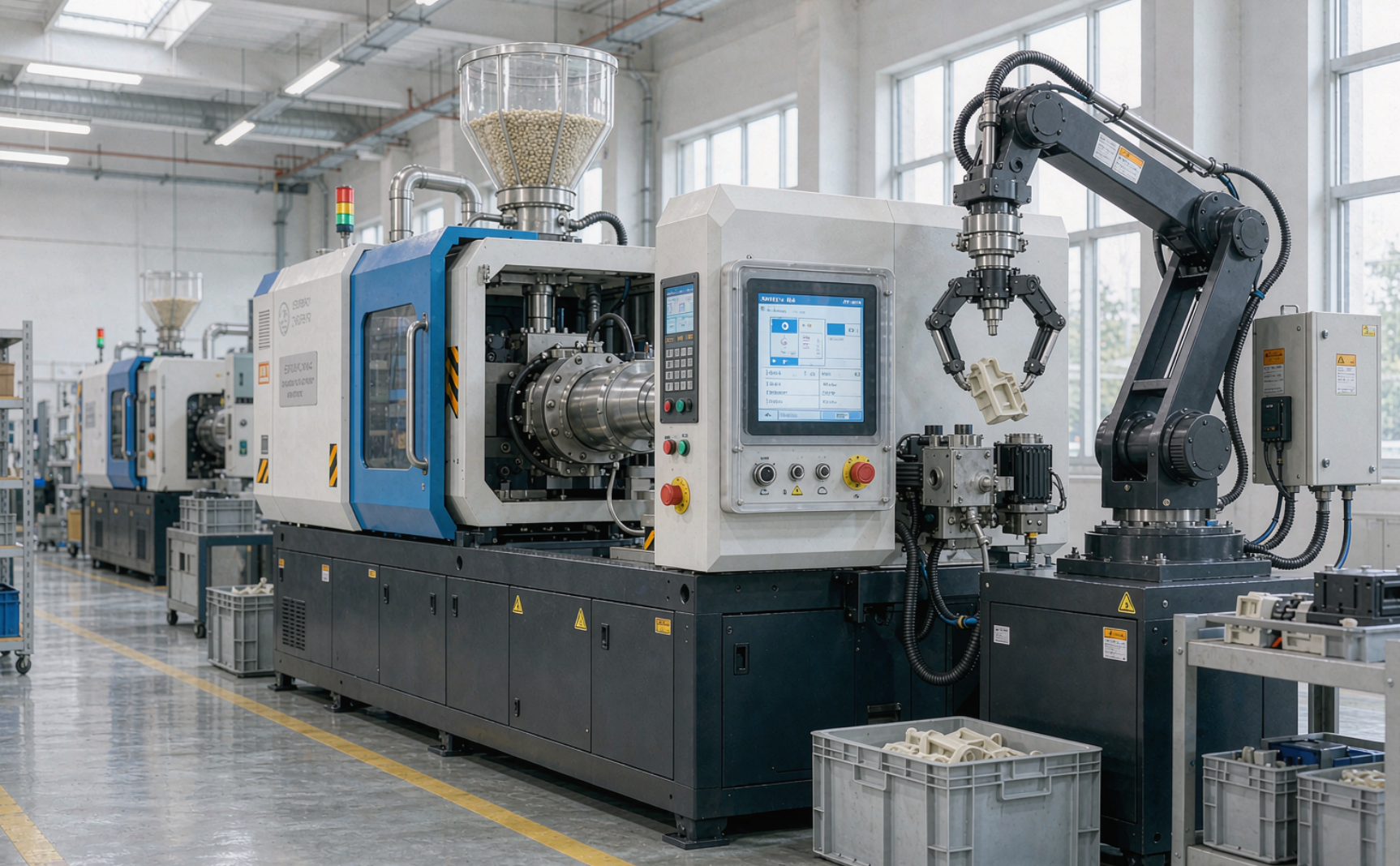
For an original equipment manufacturer, the hydraulic cylinder is rarely the headline component of a machine — yet it is almost always the part that determines whether that machine moves smoothly, lifts safely, and keeps working after thousands of duty cycles. Specifying the wrong cylinder is one of the most expensive mistakes an OEM can make, because the cost is not just the unit price. It is field failures, warranty claims, downtime, and the slow erosion of a brand’s reputation with end users.
This guide walks through everything a buyer needs to evaluate a hydraulic cylinder — from the internal architecture and the physics of force, to seal materials, mounting styles, and the supplier quality controls that actually matter. Whether you source standard catalog cylinders or commission custom designs, the framework below applies.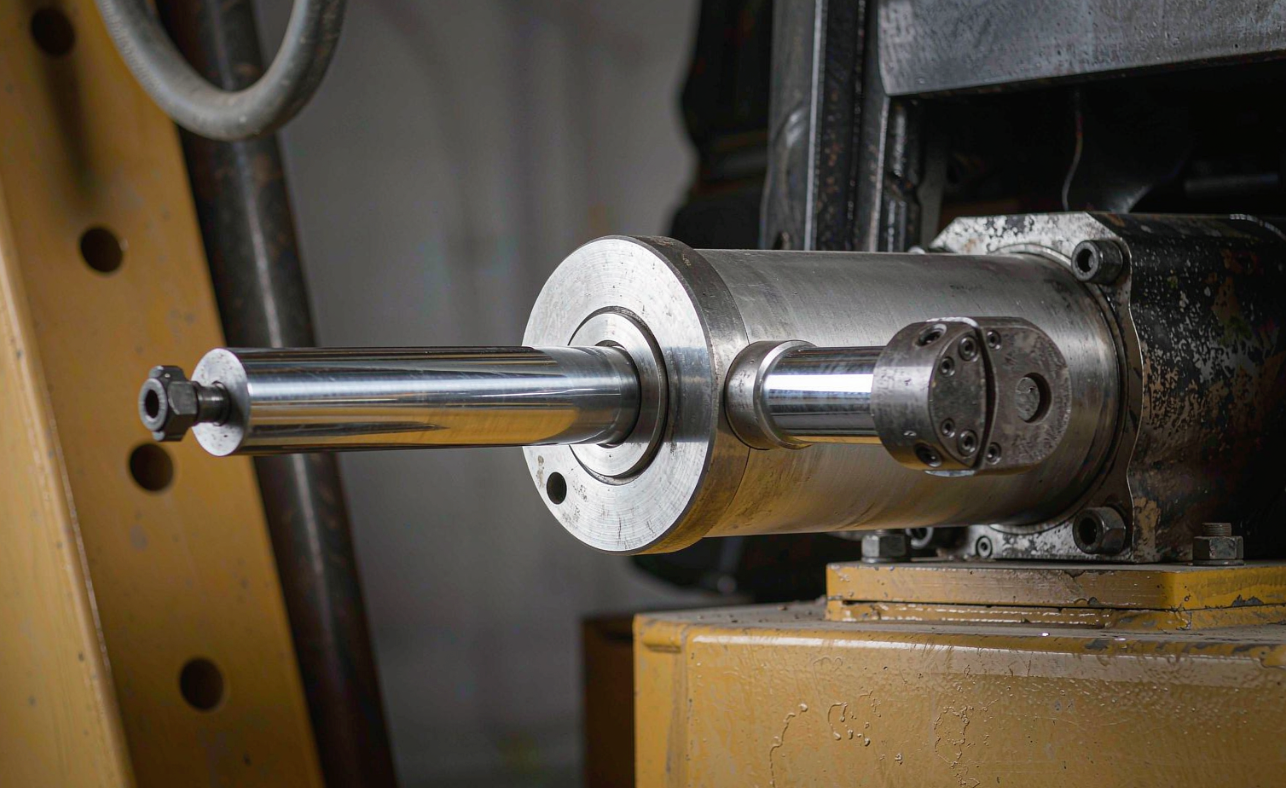
1. Understanding the Basic Architecture
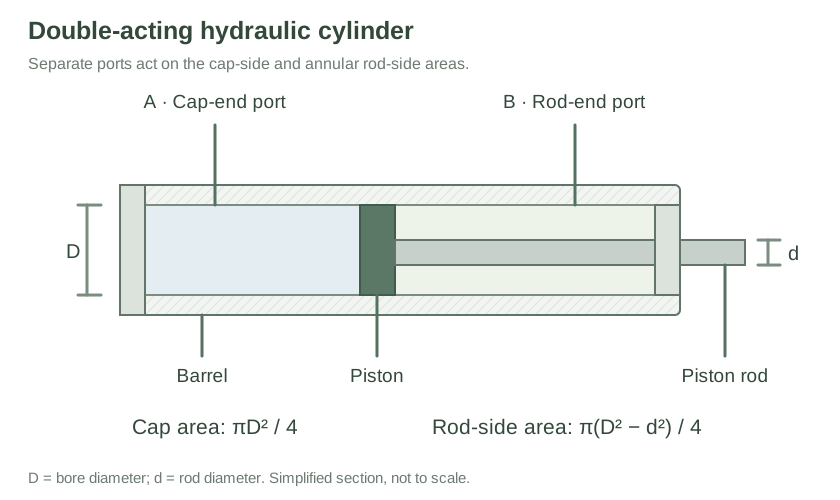
At its core, a hydraulic cylinder is a simple device: a cylindrical barrel, a piston that slides inside it, a rod attached to the piston, and seals that keep fluid where it belongs. Pressurized hydraulic oil enters one side of the piston, and the resulting force pushes the piston — and the rod — in a straight line. That linear motion is what lifts a loader arm, tilts a dump body, or clamps a workpiece.
The key components a buyer should learn to read are:
- Barrel (tube): must hold system pressure without yielding. Honed seamless tubing is the industry norm for precision cylinders.
- Piston: transfers fluid pressure into mechanical force. Its seal grooves define leakage performance.
- Rod: the output member. Its diameter and surface finish dictate side-load capacity and seal life.
- Seals: the true lifespan limiter. A cylinder is only as good as its rod and piston seals.
- Ports: where fluid enters and exits. Their size and position affect flow velocity and installation.
2. Single-Acting vs. Double-Acting
The first fork in any cylinder specification is how the rod returns.
Single-actingcylinders apply force in one direction only. Fluid pushes the rod out; gravity, a spring, or an external load returns it. They are simpler, cheaper, and common in lifting and jacks where the return path is naturally provided by the load.
Double-actingcylinders apply force in both directions by feeding fluid to either side. This is essential for applications that must push and pull — think steering cylinders, excavator arms, and press rams. They cost more and require more ports and valving, but they give precise two-way control.
3. Tie-Rod, Welded, and Telescopic Designs
Construction method affects both price and robustness:
- Tie-rod cylinders: assembled with external rods threading through end caps. Easy to service and standardized (NFPA dimensions), but bulkier. Common in industrial machinery.
- Welded cylinders: end caps welded to the barrel. More compact and stronger for a given bore, ideal for mobile equipment where space and shock loads matter. Harder to rebuild.
- Telescopic cylinders: multiple nested stages that extend to a long stroke from a short collapsed length. The standard choice for dump trucks and tailgates.
4. Sizing Your Cylinder: Bore, Stroke, and Rod Diameter
The single most important number is the bore — the internal diameter of the barrel — because it sets the available force. The relationship is straightforward:
A 100 mm bore at 160 bar delivers roughly 125 kN of push force. Double that bore and force quadruples — area scales with the square of diameter. Stroke is simply how far the rod travels, and rod diameter is a compromise: a thicker rod resists buckling under compression but reduces the annulus area (and thus retract force) on a double-acting unit.
OEMs should calculate the required force from the worst-case load, add a safety margin of 25–40%, then select the next standard bore. Undersizing causes slow, overloaded operation; oversizing wastes cost and space.
| Bore (mm) | Area (cm²) | Force @ 160 bar | Typical use |
|---|---|---|---|
| 63 | 31.2 | ~50 kN | Light clamping, small actuators |
| 100 | 78.5 | ~125 kN | Steering, mid lifts |
| 160 | 201 | ~322 kN | Heavy lift, press |
| 200 | 314 | ~503 kN | Excavator arms, big rams |
5. Seals and Materials That Determine Service Life
If you remember one thing from this guide, remember this: the seal package decides the cylinder’s lifespan. Common compounds and where they fit:
- Nitrile (NBR): economical, good for −30 °C to +100 °C mineral oil. The default general-purpose choice.
- Polyurethane (PU): excellent wear resistance and extrusion tolerance; preferred for rod seals in mobile equipment.
- PTFE / fluorocarbon: low friction and chemical resistance for high-temperature or aggressive fluid duty.
The rod surface matters equally. A hard chrome plating (typically 20–50 µm) with a polished finish resists corrosion and minimizes seal wear. For corrosive or marine environments, ask about nickel or ceramic coatings. Barrel material is usually cold-drawn seamless steel; stainless is reserved for food, pharma, or washdown duty.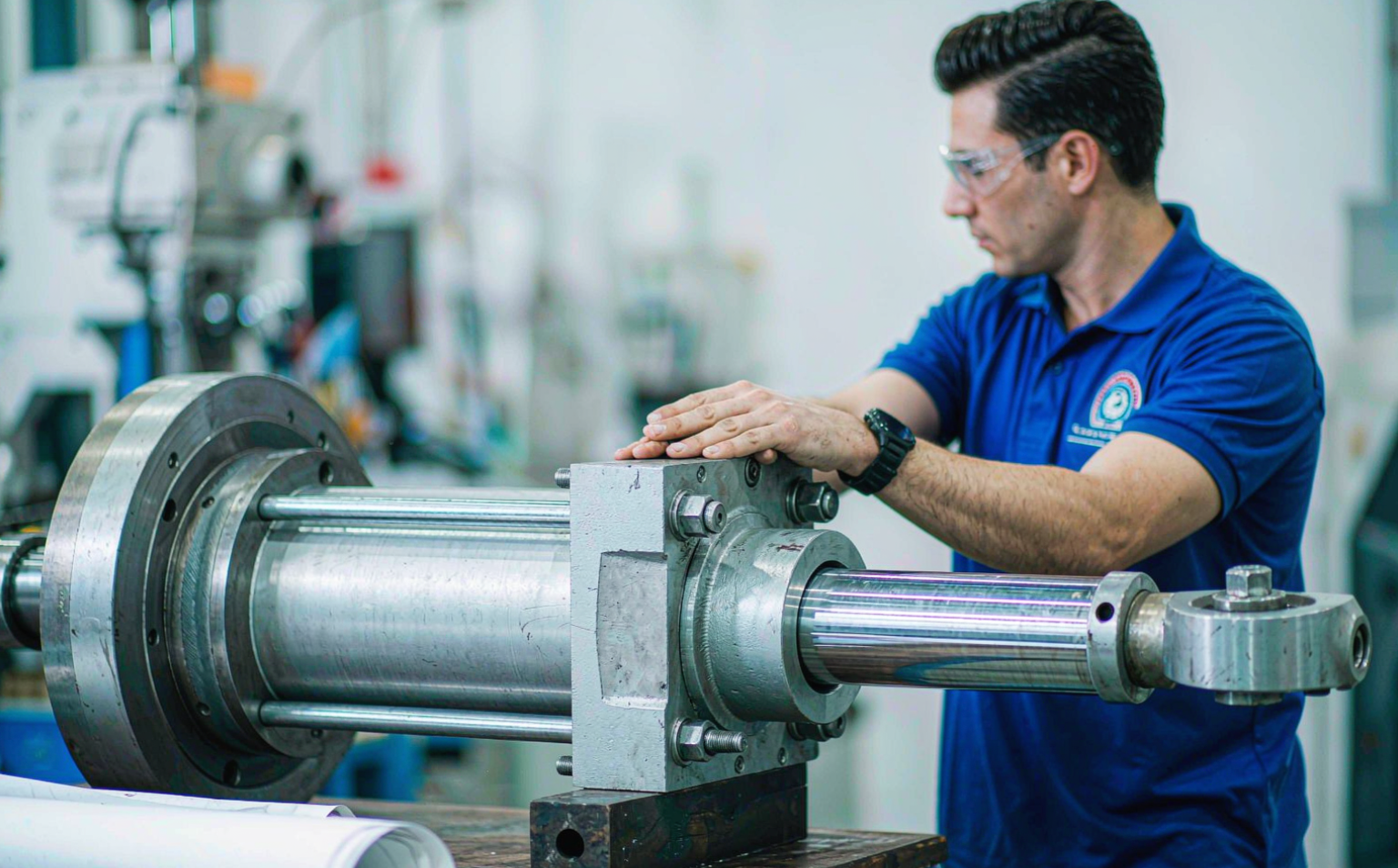
6. Mounting Styles and Why They Matter
How the cylinder attaches to the machine changes its load behavior:
- Clevis / eye: allows pivoting — best when alignment cannot be perfect.
- Foot (LC): rigid, absorbs reaction forces well; must be aligned precisely.
- Trunnion: center-pin mounting for high side loads and compact envelopes.
- Flange: square or rectangular flanges on the cap or head for high thrust.
Mis-matched mounts cause side loading that destroys rods and seals long before their rated life. Define the mount from the machine’s actual kinematics, not from a catalog default.
7. What to Check in a Supplier’s Quality System
Price per unit is the least informative number on a quote. The differentiators that protect an OEM are:
- Certification: ISO 9001 at minimum; IATF 16949 for automotive-tier supply.
- Traceability: can the supplier tie each cylinder to its material certs and test record?
- Testing: proof-pressure and leakage testing on every unit, not just samples.
- Engineering support: do they review your spec and push back on risky choices?
- Lead time and capacity: a low price is worthless if delivery slips your production line.
8. Common Sourcing Mistakes OEMs Make
- Specifying by price alone and discovering the seal life is a third of the benchmark.
- Ignoring side load — the #1 cause of premature rod seal failure in the field.
- Over-looking fluid compatibility when switching to biodegradable or fire-resistant fluids.
- Skipping a first-article inspection on a custom design and finding the error after 500 units.
- Treating all “160 bar” cylinders as equal when wall thickness, rod hardness, and seal grade vary wildly.
9. Cushioning and End-of-Stroke Control
When a cylinder drives a heavy load at speed, the impact at the end of stroke can damage the machine and rattle the operator. Cushioning solves this: a tapered restriction in the barrel slows the piston during the final centimeters of travel, decelerating the load gently before it seats. Adjustable cushions let you tune deceleration to the actual load. For low-speed or light-duty strokes, non-cushioned cylinders are perfectly adequate and cheaper; for fast, heavy strokes, cushions are essential for both ride quality and component life. Specifying cushioning where it is not needed adds cost, while omitting it where it is needed invites bent rods and cracked mounts.
10. Fluid Compatibility and Filtration Basics
No cylinder lives in isolation from its fluid. The same hydraulic oil that transmits force also lubricates seals and carries away heat. Keep ISO 4406 cleanliness around 18/16/13 or better for precision cylinders, backed by adequate filtration at the power unit. Water contamination — common in outdoor mobile equipment — accelerates seal swell and rod corrosion, which is a strong argument for the right compound and for a disciplined drain-and-sample schedule. Compatibility cuts both ways: if you switch to a biodegradable ester or a fire-resistant fluid, re-verify the seal material, because a compound that is flawless in mineral oil can degrade within weeks in the wrong fluid.
11. Looking Beyond the Unit Price
The purchase price of a cylinder is typically a small fraction of its lifetime cost. Energy losses from oversized or leaking units, the labor to replace a failed cylinder in the field, and the downtime while a machine sits idle all dwarf the initial saving of choosing the cheapest quote. A useful exercise for any OEM is to model three years of operation for two candidate cylinders — factoring expected seal life, rebuild cost, and failure rate — rather than comparing two line items on a spreadsheet. The cylinder that costs 15% more up front frequently proves 30% cheaper to own, and it protects the machine brand at the same time.
Conclusion
A hydraulic cylinder looks like a commodity and behaves like a precision instrument. The OEMs that win are the ones who treat cylinder selection as an engineering decision — calculating force honestly, specifying seals and mounts for the real duty cycle, and qualifying suppliers on testing and traceability rather than the lowest line item. Do that, and the cylinder stops being a source of warranty calls and becomes the reliable muscle your machine is built around.